
What Is a Fittings Schedule and How Can It Save Money on a Renovation?
One of the biggest mistakes people make during a renovation is sourcing everything separately, at different times, from different suppliers, without an overall plan.
That is usually where budgets begin to spiral.
A fittings schedule helps solve that problem.
Whether you are renovating a private home, designing a hospitality project or managing a commercial fit-out, a clear fittings schedule can save a huge amount of time, money and stress.
What is a fittings schedule?
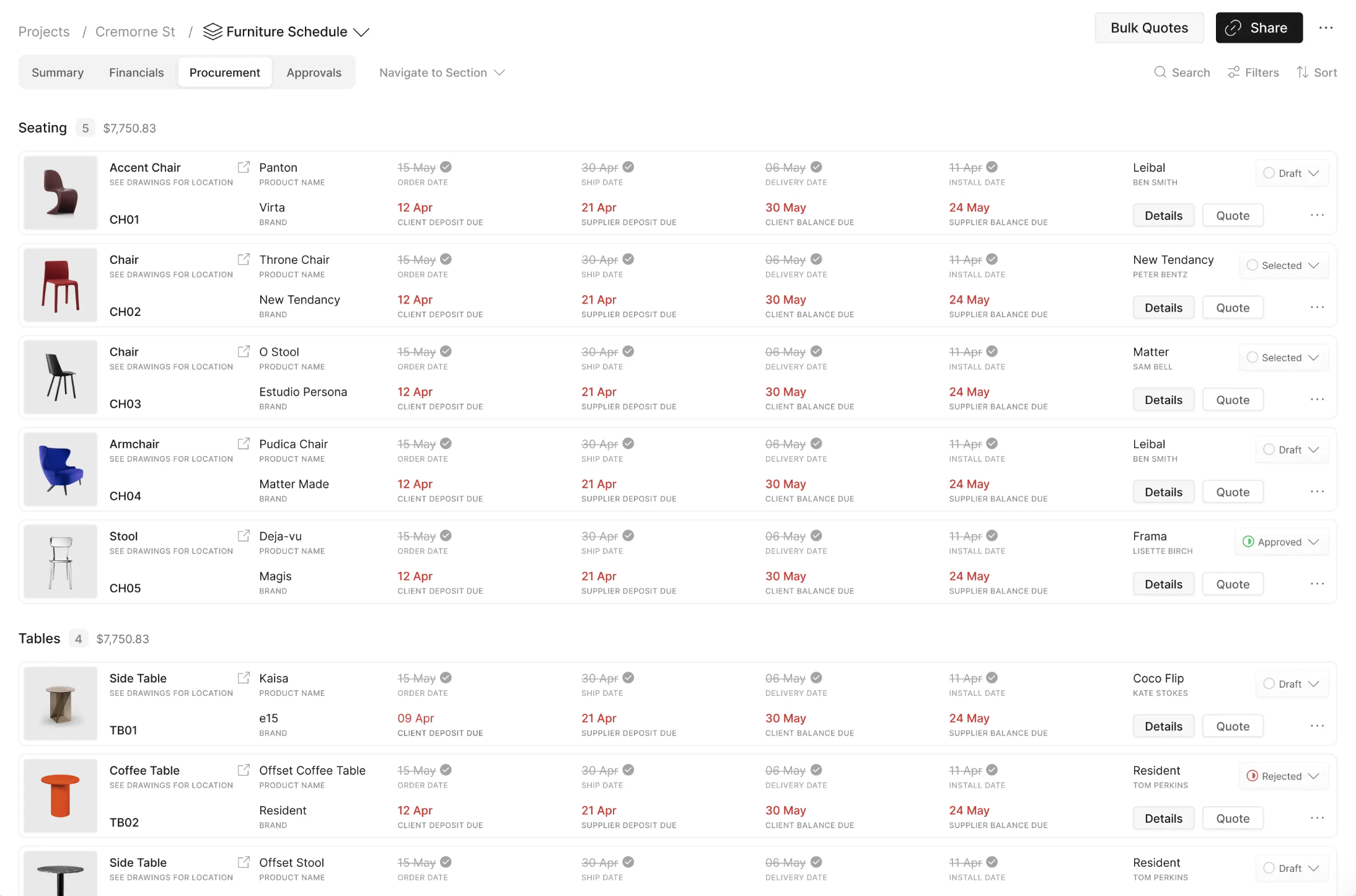
A fittings schedule is a detailed document listing all the materials, fixtures, finishes and products required for a project.
Depending on the project, this might include:
Lighting
Internal doors
Ironmongery and handles
Sanitaryware
Tiles and stone
Joinery finishes
Furniture
Switches and sockets
Windows
Hardware
Built-in cabinetry
Kitchen elements
Bathroom fittings
Think of it as the master roadmap for all the physical items that need to be sourced, produced and delivered for a space.
Why does it matter?
Without a fittings schedule, renovation decisions often happen reactively.
A contractor suddenly needs taps. A joiner asks for hardware specifications. Lighting has not been confirmed. Tiles are delayed. Budget tracking becomes unclear because purchases are happening in isolation.
A schedule allows everything to be viewed together from the start.
This makes it easier to:
Control budgets
Avoid duplicate shipping costs
Reduce rushed purchases
Maintain design consistency
Compare suppliers properly
Coordinate timelines
Plan production and lead times
How can it save money?
One of the biggest financial benefits comes from consolidation.
When products are sourced together, shipping can often be combined into shared freight rather than split across multiple expensive deliveries. Factories can also coordinate production more efficiently when they understand the wider scope of the project.
A fittings schedule also reduces costly mistakes.
It is much easier to spot where dimensions clash, finishes do not match or lead times create problems before production begins.
In many renovations, delays become expensive very quickly. A missing handle or delayed light fitting can hold up multiple trades.
Why we use fittings schedules at Present
At Present, we often work from architects’ schedules, moodboards, renders or even simple spreadsheets to help clients source furniture, fittings and materials directly from trusted factories.
Sometimes we are producing one bespoke item. Other times we are helping clients coordinate an entire house worth of lighting, furniture, sanitaryware, hardware and finishes.
Having everything mapped together early allows projects to move far more smoothly.
It also helps clients understand where it makes sense to invest and where savings can be made without compromising the overall design direction.
Fittings schedules are not just for large projects
People often assume schedules are only useful for commercial developments or luxury homes, but even smaller renovations benefit massively from having one.
A clear schedule creates structure.
It helps prevent last-minute panic buying, inconsistent finishes and expensive timeline delays.
Most importantly, it allows the entire project to feel intentional rather than pieced together room by room.
Final thought
Good renovations are rarely just about choosing beautiful objects.
They are about coordination, timing, planning and making hundreds of small decisions work together coherently.
A fittings schedule might not be the most glamorous part of a project, but it is often one of the things that makes the biggest difference.